What many people likely don't consider is that there's an umbilical cord connecting humanity to Mother Earth. This cord is intertwined with climate, soil, water, plants, and wildlife and many other components. If even only one of them is missing, the risk of human extinction on Earth increases.
The Middle East is a region where some wildlife has been subjected to the possibility of extermination.
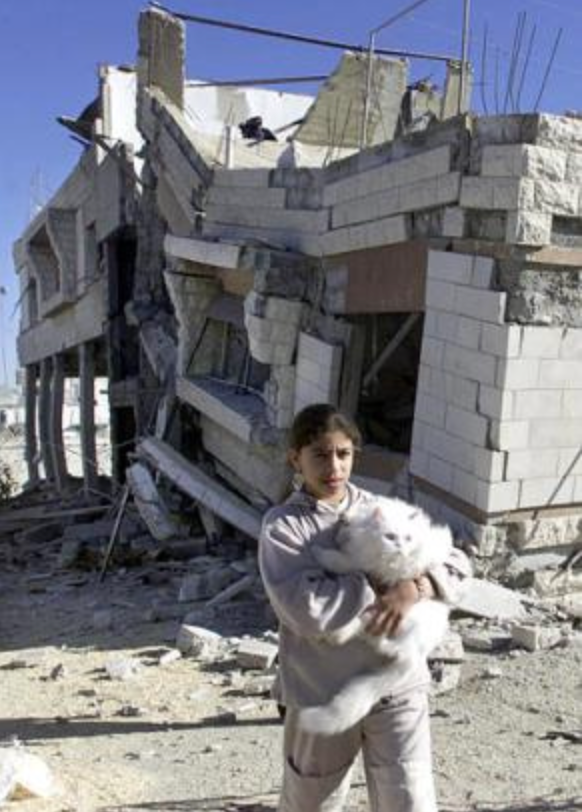
The fallacy is that war ends at national borders and that the losses of war are measured by the number of dead, wounded and displaced. There is another, less visible loss that rarely appears in news bulletins, yet may be far more dangerous. The disappearance of wildlife from the natural landscape, the collapse of its habitats, the disruption of ecological chains, and the loss of genetic strains that cannot easily be restored all have a profound impact on the ecological imbalance and accelerating climate change.
Wars cause ecosystems to lose their natural ability to regulate the Earth’s temperature, transforming the environment from a sink for greenhouse gases into a source of them. This is where the great danger lies.
In Syria, Iraq, and Yemen, years of war and armed conflict have intersected with poverty, drought, the decline of the functioning of state institutions for the greater good, and the spread of unregulated hunting and wildlife trafficking
Wild animals have become little-publicised victims of wars to which they were never a party to.
War does not need to directly target an animal to destroy it. It is enough to displace it from its reserves, cause the disappearance of oversight over its living conditions, reduce water supplies, make hunting a source of income for displaced people, or turn the land into a military or unsafe area for environmental researchers.
The Arabian horse
The Arabian horse is not merely a domesticated animal in Syria; it is part of a deep social and cultural history, particularly associated with the Bedouin way of life, horse breeding, and the preservation of bloodlines and pedigrees. With the outbreak of the Syrian war, horse farms and breeding centres were destroyed and looted, while breeders were forced to flee and leave their animals behind.
According to the World Arabian Horse Organization (WAHO), there were approximately 8,500 registered purebred Arabian horses in Syria in 2011, while the organisation estimates that around 5,500 are in the country now. Dozens of horses belonging to very rare Syrian bloodlines were lost.
The overriding loss is not merely the number of horses that died, but also the disappearance of pedigree records, breeding centres, specialised breeders, and the infrastructure that once allowed a breed to continue.
Media reports indicate that some horses located after years of war were in extremely poor health due to a lack of food and veterinary care. In June 2026, Syrian authorities were still working with the World Organization for Animal Health on procedures governing the movement of purebred Arabian horses into and out of Syria, an indication that rebuilding this sector had become part of the post-war phase.
Reem Gazelle
If the Arabian horse represents human heritage, then the gazelle represents the natural heritage of the steppe. Gazelles, popularly known in parts of the region as the reem, were once part of the natural landscape of the Syrian and Iraqi steppes and deserts. But the poaching that began with the war resulted in a major massacre of these wild animals.
The Brown Bear
As for the brown bear, its presence in Syria is now extremely rare because of the war. There are records of relatively recent bear traces in the Eastern Lebanese mountains near the Syrian border, while scientific sources consider its presence in Syria today to be extremely rare or perhaps extinct.
In contrast, the Syrian brown bear still exists in Iraq’s Kurdistan region, where it faces more complex problems due to climate change and increasing indiscriminate hunting. A study published in 2026 indicates that suitable bear habitats in the Kurdistan region of Iraq are under significant pressure and that rising temperatures, drought, and habitat fragmentation may reduce suitable areas for it in the future.
The otter
If there is a story that encapsulates the relationship between war and the environment in Iraq, it is that of the Mesopotamian Marshes. These wetlands are not merely swamps; they are one of Iraq’s most important ecosystems and a habitat for many birds, fish, and mammals. Among the best-known animals associated with them is the otter. In Iraq, the smooth-coated otter is a species of great importance for preserving Iraq’s ecological diversity. During decades of war and instability, the marshes were subjected to widespread destruction and drying, causing the collapse of large parts of the habitat of aquatic animals. A study by a group of environmental researchers on otters affiliated with the International Union for Conservation of Nature indicates that otter populations declined sharply, particularly during the Iran-Iraq War and the subsequent draining of the marshes in the 1990s. The researchers warned that the draining of the marshes of southern Iraq could have led to the global extinction of the Iraqi smooth-coated otter.
The Arabian leopard
If there is an animal that represents the tragedy of wildlife in Yemen, it is undoubtedly the Arabian leopard. It is among the most endangered animals in the region. A study published in the journal Oryx indicates that the number of Arabian leopards remaining in the wild worldwide at fewer than 200 with small and fragmented populations in Yemen and Oman, and possibly Saudi Arabia.
In Yemen, what is even more alarming is that leopard killings have been recorded in areas that have experienced ongoing conflict, such as parts of Abyan, Lahj and Al Dhale’e, where rival militias targeted the animals as a form of retaliation
A Troubling Future
Some animals might disappear without the world ever recording the moment they are gone. There is no image of an explosion, no collapsed building, and no funeral — only an empty expanse of plains and plateaus that once served as a stage where wild animals grazed and moved about peacefully.
Talking about the plight of gazelles, leopards, horses, and otters may seem like a luxury when human communities are suffering from war. But this is a short-term view that does not go beyond the tip of the nose.
Wildlife is part of the system on which humans depend, and the disappearance of wild animals may affect human existence. The disappearance of animals leads to the deterioration of forests and mountains and alters the water and soil cycles. The loss of local animal breeds means the loss of part of our genetic and cultural heritage.
For this reason, protecting wildlife during wars is not merely an emotional issue; it is a matter of environmental security directly linked to human existence on this planet.