The departure of the UN peacekeeping force will likely create uncertainty and the potential for resumed armed conflict in the Western Sahara, with Morocco and Algeria pushing their competing interests.
The future of Western Sahara is entering a potentially decisive phase in the long-running dispute between Morocco and the Polisario Front, the political-military organisation seeking to end Morocco’s control of the former Spanish colony and Algeria's influence. However, the pending departure of the UN peacekeeping mission known as MINURSO should not automatically be interpreted as the beginning of a military confrontation. Rather, it will likely represent a major shift in the international mechanisms governing the dispute and could create a monitoring vacuum, heighten diplomatic uncertainty, and place greater responsibility on the West to prevent military escalation in the Western Sahara. The central question is not simply whether war could resume, but whether the existing political framework can withstand the weakening or disappearance of the principal United Nations field mission.
Let’s look at the issues involved:
1. The End of MINURSO: A Turning Point in the Dispute
A significant development occurred on Oct. 30 when the United Nations Security Council failed to renew MINURSO’s mandate after two competing draft resolutions were rejected.
The United States had proposed extending the mission’s mandate until October 2027, changing its name to the United Nations Mission in Western Sahara (MINUSO), and moving toward a political framework centered on autonomy under Moroccan sovereignty. Russia exercised its veto against the American draft. A competing Russian proposal to renew MINURSO’s mandate failed to secure the required number of votes.
As a result, the mission’s mandate expired at midnight on Oct. 31, and the United Nations began scaling back its operations. Nevertheless, UN Secretary-General António Guterres reaffirmed the organisation’s commitment to achieving a peaceful political settlement and called on all parties to exercise the utmost restraint.
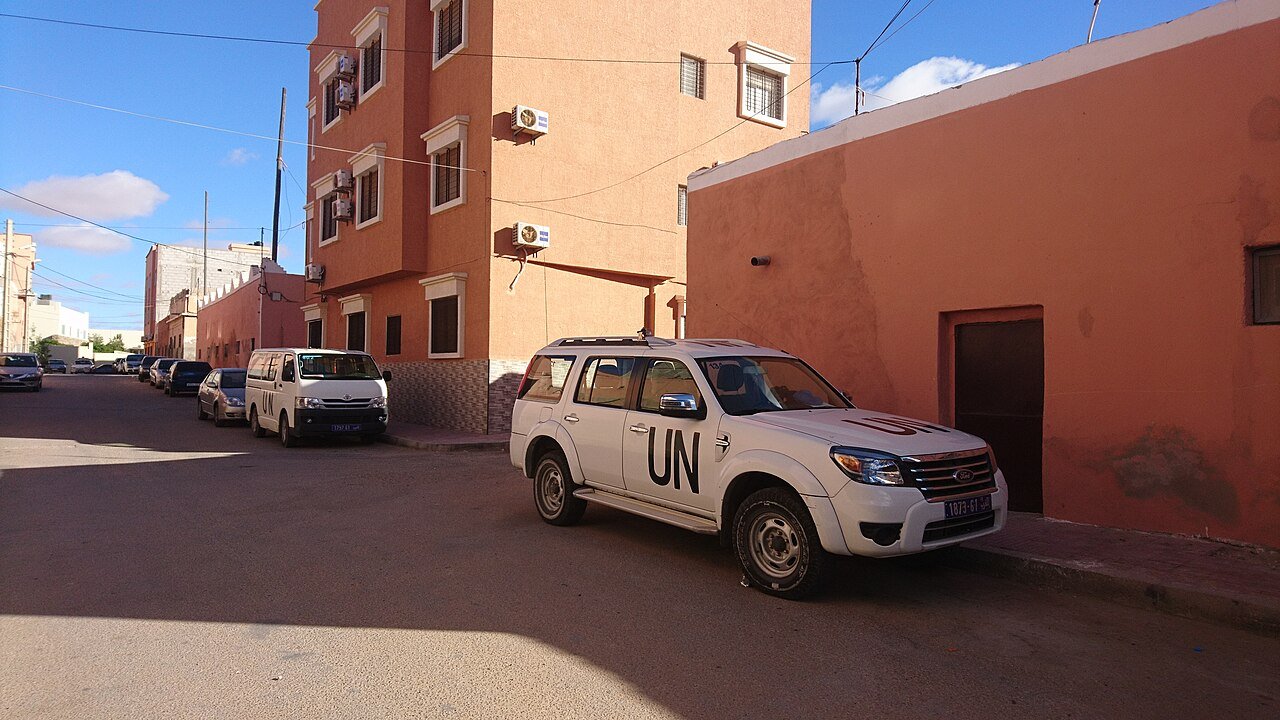
This development is particularly significant because MINURSO was never merely an administrative UN presence. Since 1991, it has played a role in monitoring the ceasefire, tracking military developments on both sides of the territory, reporting incidents, and helping prevent local tensions from escalating into a broader confrontation.
Its departure raises a serious question: Who will now provide an internationally recognised mechanism for monitoring developments on the ground?
2. Possible Scenarios Following MINURSO’s Departure
(A) new political reality without a major military confrontation
The most likely outcome involves the consolidation of a new political status quo. Morocco may seek to strengthen its diplomatic position by expanding international support for its autonomy proposal, increasing the territory’s political and economic integration, and encouraging more countries to endorse the framework it is proposing.
The Polisario Front, by contrast, may intensify its diplomatic efforts to prevent the international community from treating the dispute as a politically settled matter.
Under this scenario, the conflict would increasingly evolve into a struggle over international legitimacy, diplomatic recognition, and competing interpretations of the right to self-determination, rather than a large-scale military confrontation.
The central challenge will be whether the parties can establish a new political framework that preserves regional stability while addressing their conflicting positions on the territory’s future.
(B) A renewed military escalation
The second scenario concerns the possibility of a deterioration in the security situation following MINURSO’s departure.
The absence of international military observers could make it more difficult to establish an independent account of incidents, verify competing claims, and facilitate rapid de-escalation.
Consequently, containing existing tensions between Morocco and Algeria (and the Polisario Front) could become more difficult.
It is important to distinguish between the possibility of renewed clashes and the outbreak of an all-out war. The former represents a conceivable and existing risk, while the latter would carry far greater political, economic, and regional consequences.
A military confrontation could also threaten to draw Mali and Mauritania into a broader diplomatic and security crisis, even if neither country wishes to become directly involved.
For this reason, MINURSO’s disappearance does not, in itself, create any legal or political obligation for any party to resort to force.
(C ) A protracted confrontation between Morocco and Algeria
The third scenario is arguably the most dangerous from a strategic standpoint, as it concerns the broader balance of power in the region.
The Western Sahara dispute is not merely a territorial disagreement between Morocco and the Polisario Front. It is also linked to the long-standing strategic rivalry between Morocco and Algeria, including disagreements over regional influence, security arrangements, and the future political order in North Africa.
The end of MINURSO could generate additional diplomatic pressure on Algeria, particularly if Morocco views this development as an opportunity to strengthen its international position.
Algeria may seek to reinforce its diplomatic support for the Polisario Front and keep the Western Sahara issue within the international decolonisation framework.
A direct military confrontation between Morocco and Algeria would entail enormous costs for both countries. Such a conflict would threaten regional trade, investment, energy cooperation, and security across North Africa and the Sahel region.
For this reason, diplomatic confrontation, political pressure, and international rivalry remain more likely than a deliberate decision by either country to engage in direct war.
(D) A new international mediation framework
Another possibility is the emergence of a new diplomatic mechanism to replace the role previously played by MINURSO.
The United Nations could maintain its political engagement through the secretary-general’s personal envoy, Staffan de Mistura, while seeking to establish a new arrangement acceptable to the principal parties.
Such a framework could include:
This scenario would offer the greatest opportunity to prevent MINURSO’s disappearance from becoming a catalyst for a wider regional crisis.
3. Will the Western Sahara Issue Move to the UN’s Special Political and Decolonisation Committee?
Historically, the territory has remained under the consideration of the UN General Assembly within the framework of decolonisation, while the Security Council has handled the security situation, MINURSO, and the political process.
The Special Political and Decolonisation Committee examines issues concerning Non-Self-Governing Territories and prepares recommendations for submission to the General Assembly. Western Sahara remains on the UN list of Non-Self-Governing Territories.
This distinction is fundamental because the Special Committee and the Security Council perform different functions.
The Security Council bears primary responsibility for maintaining international peace and security, while the Special Committee addresses the issue through the framework of decolonisation and self-determination.
Consequently, the Special Committee’s political importance will be increasing following the end of MINURSO. However, this does not mean that it has acquired the powers of the Security Council.
The Polisario Front and the countries supporting its position can continue to rely on the decolonisation framework by emphasising that the future status of Western Sahara remains unresolved.
The Special Committee provides an institutional platform for maintaining this position, even in the absence of MINURSO.
Morocco may view the non-renewal of MINURSO’s mandate as an opportunity to move beyond the previous framework for managing the dispute and push for a political settlement based on the autonomy initiative it has proposed.
Conversely, opponents of this approach may use the General Assembly framework to prevent the international community from considering the dispute definitively settled.
The Special Committee provides countries with an opportunity to express their positions, submit draft resolutions, and influence the broader international debate.
The committee’s proceedings during October demonstrate that Western Sahara remains an active subject of international diplomatic discussion.
Morocco presents autonomy under its sovereignty as a framework for resolving the dispute. Algeria and the Polisario Front maintain that the Sahrawi population must exercise their right to self-determination through a process they consider genuine and internationally guaranteed.
The disagreement, therefore, is not simply about the territory’s administrative structure. It concerns the ultimate source of political legitimacy and the nature of the final settlement.
The Special Committee provides an international platform through which these competing interpretations can continue to be debated.
The possibility of renewed hostilities cannot be ruled out, particularly given that the ceasefire arrangements have already been seriously weakened since 2020.
The outbreak of a major conflict would threaten Morocco’s economic development, disrupt a vital pillar of Algeria’s economy if oil and gas wells were significantly affected, and undermine the stability of neighboring countries.
Without MINURSO, independently verifying security incidents could become more difficult to prevent and investigate.
Conflicting accounts and mutual accusations could intensify tensions, particularly if an incident results in casualties or is interpreted as a serious violation.
The United States, France, Russia, and other influential international powers have differing interests and positions regarding the dispute.
Their diplomatic engagement could either facilitate a new political settlement or deepen divisions within the Security Council.
Ultimately, the greatest risk is not necessarily an immediate decision to launch a major war, but rather the gradual erosion of the mechanisms that previously helped contain tensions.