An agreement cannot hold simply because the officials presenting it have permission to negotiate. The authorities able to approve, obstruct, and implement its terms must become parties to the commitment, not remain behind the negotiating delegation. A proxy can sign. He cannot make the Revolutionary Guards comply, and he cannot keep China and Russia attached to the bargain. Direct contact, however, solves only half the problem, and any honest argument has to say so at the start. Supreme Leader can order compliance and still judge that continued pressure serves him better at home. The American side is unreliable in its own way: Washington left the 2015 agreement that China and Russia had also signed, and Suzanne Maloney of the Brookings Institution warned at the time that withdrawal created escalation risk without a replacement strategy. If Tehran cannot expect a concession to survive the next turn in American politics, an order from the top will be temporary too. The trade has to be staged and reversible, not a promise no president can make for his successor.
Western diplomacy toward Iran faces a complex challenge, as the authority to negotiate does not necessarily translate into the power to enforce an agreement. With political and military influence extending beyond the diplomatic establishment, any lasting deal must account for Tehran’s internal power structures, Washington’s credibility, and the interests of international partners.
The Foreign Minister Who Could Not Give Orders
In April 2021, a recording of Iran's foreign minister became public. Mohammad Javad Zarif complained about the Revolutionary Guards' influence over foreign policy, saying he had repeatedly been forced to sacrifice diplomacy for "the field." The remarks were never intended for publication.
Zarif was defending his record, so the recording is not a complete account of Iranian policy. But it raises a question that outlasts any minister: if the official responsible for an agreement cannot secure the military conduct needed to support it, how does the other side know what is really going to be offered and delivered. Khamenei publicly rebuked Zarif over the remarks. Diplomatic responsibility can exceed diplomatic authority.
In February, with talks under way, Khamenei’s father, Ali, was alive and the supreme leader. Laurence Norman of The Wall Street Journal argued that any durable agreement had to involve Ali Khamenei himself; the alternative, he wrote, was "power without responsibility."
The Wrong Room
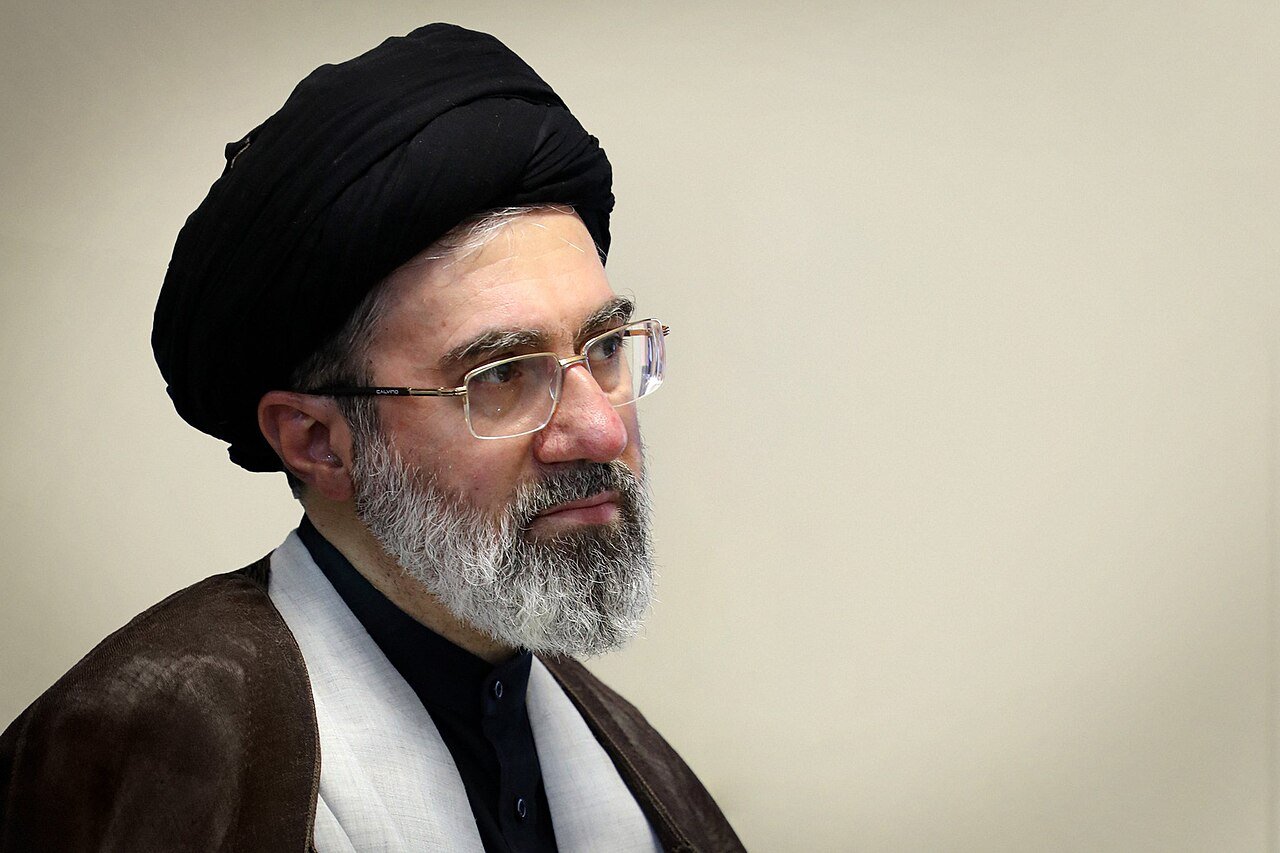
The West should stop treating Iranian President Masoud Pezeshkian and Foreign Minister Abbas Araghchi as the counterparts who can end the current war. The counterpart who can is Supreme Leader Mojtaba Khamenei and the Islamic Revolutionary Guard Corps. The civilians carry messages; they do not command the forces that mine, fire, and decide whether a text is real, and they do not own the relationships that let Iran sell oil to China and take political cover from Russia.
What June’s Memo Proved
U.S. President Donald Trump and Pezeshkian signed a memorandum on June 17 aimed at ending the current war and establishing a framework for lasting peace. Washington lifted the blockade. Mojtaba Khamenei said he had held a different view in principle, giving permission only after Pezeshkian, as head of the Supreme National Security Council, accepted responsibility for protecting Iran's rights, and adding that future face-to-face talks would not mean accepting the American position.
Read that as a chain. The leader authorised the paper. The president owned the blame. The Guards and the waterway were never inside the commitment in a way that survived the first dispute over what "safe passage" meant. Attacks returned. The deal died.
The same split is public now. Iran's ambassador in Islamabad said Tehran had offered, through Pakistan, to reopen Hormuz if Washington lifted the blockade. Tasnim, a Revolutionary Guards-affiliated outlet, called that account "lies and fantasy" and said no such proposal had been made. Mojtaba has not been seen in public since the war began. He still meets the people who matter: this week his security chief, on the war and Hormuz; and parliament Speaker Mohammad Bagher Ghalibaf, Iranian media reported, on the military and economic confrontation and on "advancing relations with strategic partners."
A Proxy Is a Buffer
In March, U.S. officials looked at Ghalibaf, a former Guards commander as a possible contact and conduit. He later led a delegation that met U.S. Vice President J.D. Vance in Islamabad, the highest-level meeting between Iranian and U.S. officials since 1979. No settlement followed. Ghalibaf still has to clear anything that matters with the Guards and Mojtaba Khamenei.
Meeting the leader to discuss "strategic partners" is what a subordinate does. Proximity is not power.
In 2023 Tehran sent Ali Shamkhani, its security chief and an ethnic Arab, to restore ties with Saudi Arabia, and left the foreign ministers to handle the follow-through. The test is not the title. It is whether the person can carry the decision through Mojtaba and through the unit that has to stop firing.
The bet failed on both gates. Ghalibaf had no way to assemble the system behind him, and he carried neither the backing of Beijing or Moscow nor any sign they would treat him as the counterparty for the oil and the cover.
A man who wants to be a decision-maker rather than a decision-carrier needs the apparatus behind him at home and China and Russia at least not standing against him.
The Guards Are Not One Desk
" Talk to the Guards" is unfinished if it means one commander. Narges Bajoghl, a Johns Hopkins academic authority on Iran, pointed out that the people who reproduce power inside that apparatus do not agree on what the system is, or which story of the revolution is still defensible. The split is generational, not a matter of taste. One commander can satisfy part of the apparatus and turn the rest into opponents.
Mojtaba matters here as more than a signature. Only the leader's node can judge among those stories and say the concession was the system's own decision, not an American imposition and not one faction's compromise.
What to Stop and What to Start
U.S. negotiations should start with a direct, confidential channel to Mojtaba's office and to the Guards’ command that actually issues orders. Any deal, even one struck with Mojtaba himself, needs both the Guards' compliance and the non-opposition of Beijing and Moscow.
Any functioning agreement must also name the target. An end to attacks on Americans while Gulf ports, desalination plants, and shipping remain fair game is the same war with a narrower list of victims. The unit that receives the order has to be the unit that hits the ship, the port, and the water plant, not only the unit that fires at an American base.
If the aim is instead to change the face of the system, apply one filter before any name is floated: will the Guards obey him, can Mojtaba narrate him as continuity rather than capitulation, and will China and Russia still treat him as the authority over the oil and the security relationship they already have with Iran?
The decision sits with Mojtaba and the Guards; the endurance of any decision, including a change of face, sits with whether China still buys the oil and Russia still holds the cover. If you want a different Iranian at the table, choose one; those capitals will still stand behind not one you merely prefer.
What Washington Must Change
If the United States wants to stop running in diplomatic circles, it needs to shift its rules of engagement:
Stopping the war requires negotiating with the people who are waging it. Until Washington sits across from the men with the guns and the oil networks, it is simply talking to itself.