Indonesia's diplomacy has never been busier, but busier is not the same as stronger. The country's founding "free and active" principle is quietly being redefined.
Indonesia is having an influential diplomatic moment — high tempo, new pacts, a president personally driving foreign policy across the world stage. Yet the principle that has guided the nation since 29 countries met in Bandung in 1955 to establish guiding ones is quietly being rewritten. This is a reflection on what "free and active" should still mean and why the difference between activity and achievement matters more than ever.
Rethinking Indonesia's Free and Active Diplomacy
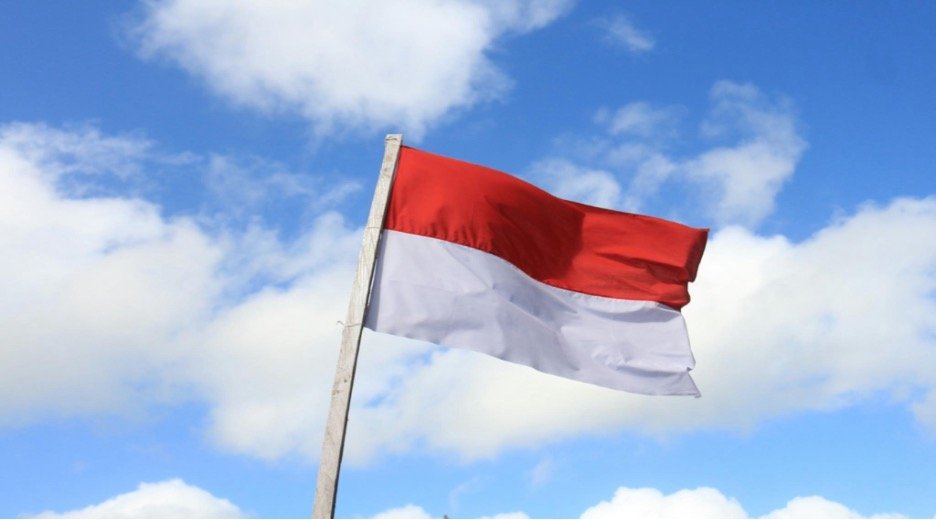
Photo by Bisma Mahendra on Unsplash
In 1955, Indonesia and four other sponsoring countries organised the Asian-African Conference in Bandung, bringing together 29 nations from both continents. Indonesia set the agenda, mediated differences, and guided newly independent states. The Bandung Principles offered an alternative during the Cold War. Seventy years later, shifting great-power blocs still shape the region, but Bandung's principles of peaceful coexistence and sovereignty continue to guide Indonesia’s role in the Indo-Pacific.
Indonesia's Foreign Policy Outlook
Today, leaders such as Indonesian President Prabowo Subianto and Vladimir Putin of Russia increasingly describe Indonesia as an emerging major power. This status is based not just on words, size, or population, but on Indonesia once again leading in the Indo-Pacific, where defence, economic, and cultural interests converge. As diplomacy moves faster and new deals are made, it’s worth asking whether Indonesia is still aiming for greatness or simply following global trends.
To answer that, we need to look at Indonesia’s location. The Indo-Pacific links the Indian and Pacific oceans. Indonesia is a key connector. The Straits of Malacca, Sunda, and Lombok, all controlled by Indonesia, are vital to global trade and energy.
However, the region is changing. The broad cooperation that once helped Indonesia rise through the Asian-African Conference, the Non-Aligned Movement, and the Association of Southeast Asian Nations (ASEAN) is fading. New, more exclusive groups such as the Quadrilateral Security Dialogue (QUAD) — Australia, India, Japan, and the United States — and Aukus, a trilateral security partnership between Australia, the United Kingdom, and the United States, are taking shape. This puts Indonesia at risk of either joining these groups out of fear of being left out or feeling powerless and becoming a pawn in bigger power struggles.
This situation also offers an opportunity to consider what serves Indonesia’s national interest. Diplomatic maturity is not about joining every meeting or signing every treaty, but about choosing carefully when to get involved and when to hold back.
Indonesia should remember that.
It always has a choice. Its "free and active" foreign policy is a guide, not just a memory. "Free" means owing allegiance to no bloc; "active" means not passive neutrality but dynamic involvement in resolving conflicts and building cooperation.
A Shift in Diplomatic Style
Indonesia’s approach to diplomacy has changed along with its leaders. Under Joko Widodo, the
focus was on practical economic results, with diplomacy frequently aimed at bringing in investment for infrastructure. With Prabowo Subianto, who became Indonesia’s president in October 2024, the style has become broader and more personal. He has made many foreign visits, spoken about regional leadership, and taken a direct role in foreign policy, which some call "personalised diplomacy.”
While Jokowi focused on infrastructure, Prabowo has shifted attention to defence, food, and energy security as the basis for Indonesia’s strength. In February 2026, Indonesia and Australia signed a security pact that is essentially the same as the 1995 agreement that Indonesia ended in 1999 in protest of Australia's leadership of the international peacekeeping force in East Timor.
Prabowo's first year featured an unusually intense tempo, 32 foreign trips to 22 countries in 12 months. His personal visibility has increasingly overshadowed bureaucratic processes, becoming the main reference point for interpreting Indonesia's diplomacy.
The problem is that Prabowo’s activity has not yet been translated into a policy that is coordinated, measurable, and durable. When engagement runs almost entirely from the palace, the Foreign Ministry risks being reduced to an executor, and the tested skills of career diplomats go underutilised.
As Darynaufal Mulyaman, an assistant professor of international relations at Universitas Kristen Indonesia, observes: "Foreign policy begins at home." Without a coordinated domestic base, even the most energetic diplomacy cannot reach its full potential.
This weakness showed during the ongoing Iran-U.S. war. When American military strikes hit Iran in February, Jakarta’s first response was hesitant, only "regretting" the escalation and calling for restraint from both sides. It took two weeks for Indonesia to firmly demand a stop to the attacks.
Prabowo offered to mediate and fly to Tehran, an instinct fully in keeping with active diplomacy, but this gesture lacked a clear plan or any realistic hope of having real influence. At first, Indonesia was only going to send its ambassador to the July funeral of Iran’s supreme leader, but it upgraded the delegation only after public pressure to do so. These actions show that gestures often come before real readiness, and responses come after problems have already started.
Capacity and Policy Limits
A strategic location is valuable only if it is managed well; otherwise, it becomes a route others
use. For example, former Chinese president Hu Jintao talked about the "Malacca Dilemma" in 2003. About 80 percent of China’s oil imports go through the Strait of Malacca, according to the Institute for Supply Management. If it were blocked, the only other options, the Sunda and Lombok straits are under Indonesia’s control. This gives Indonesia leverage it should use rather than letting these routes be used without it gaining any benefits.
However, such leverage is useless without Indonesia having any real capacity to protect its interests. Indonesia is modernising its military with new fighter jets, transport planes, and drones, all under a defence budget of IDR 187.1 trillion (US$11.6 billion). The problem is that these come from many different suppliers, including France, South Korea, Turkey, and China. This makes maintenance and system integration difficult.
Italy’s gift to Indonesia of the carrier Giuseppe Garibaldi highlights this issue in another way. Although it will be Indonesia’s first carrier, it is over 40 years old and needs expensive upgrades and major changes since it was built for jets that are no longer in use. This is a symbol of ambition, but it requires a level of readiness that may be hard for Indonesia to achieve.
A similar pattern appears with the economy. Mulyaman, the international relations professor, calls the many signed memoranda and trade deals under Prabowo, some with countries that are not major trading partners, a "noodle bowl" effect. This means there are so many overlapping agreements that they become hard to manage. The key question is whether these deals lead to real trade or just meet administrative goals, assuming that more deals are always better.
In October 2024, Indonesia’s Maritime Security Agency repeatedly pushed back Chinese Coast Guard ships that were interfering with surveys of Pertamina, its state-owned oil and natural gas corporation, in Indonesian waters. This position is legally strong. Under the UN Conventions on Law of the Seas, Indonesia’s rights over its exclusive economic zone cannot be given up because of China’s claims to territory in the South China Sea, known as the nine-dash line.
The Permanent Court of Arbitration rejected China’s claims in 2016. However, Prabowo’s state visit to China in November 2024 led to a shift in what once were entrenched positions. The two countries issued a statement highlighting “joint development in areas of overlapping claims.” Indonesia is accommodating in talks with Beijing because of overriding economic interests.
Principle Over Alignment
Indonesia’s "free and active" policy was never about joining with an East or West political bloc but about sticking to principles no matter the partner. The concern now is that this principle is fading. Mulyaman says it has become selective pragmatism on Indonesia's part.
Still, today’s challenges require a steady guide, not just short-term calculations: balancing economic dependence and maritime pressure from China and defence ties with the United States against the freedom for Indonesia to make its own choices.
Indonesia must put its interests first, because without that, there is nothing left to protect. This realism should help Indonesia stay independent and not controlled by others.