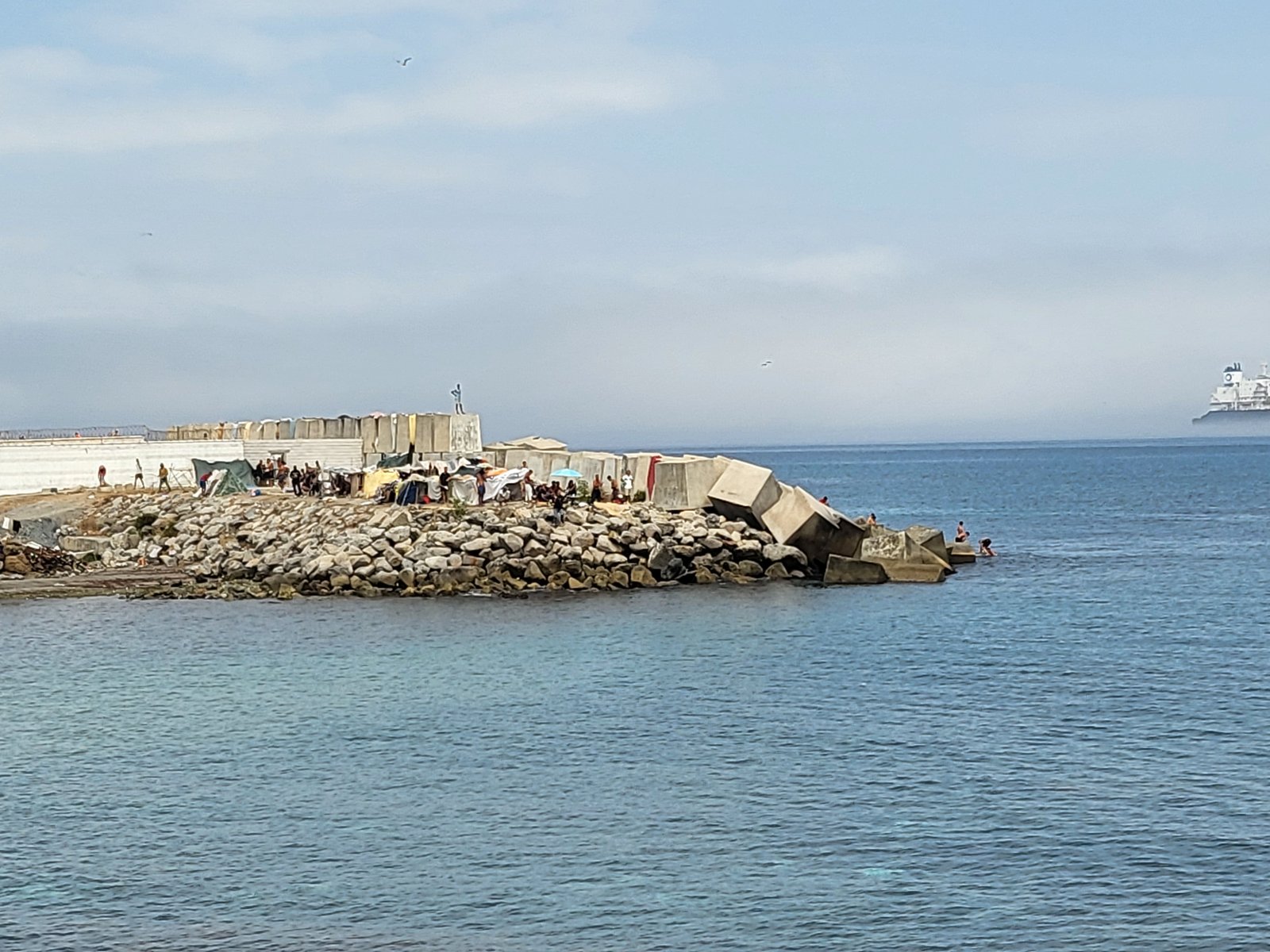

Houthi control of the Red Sea already costs the global economy tens of billions.
More than 1,000 airstrikes against the Houthis since March 2025 have failed to stop their operations. They continue attacking shipping and expanding control of the Red Sea.
As the Houthis tighten control of the Bab el-Mandeb Strait, Western policymakers are treating a systemic trade crisis like a military problem. Over 1,000 airstrikes since March 2025 have not stopped Houthi operations or reversed their territorial gains. At the same time, there is no diplomatic channel, no Yemen peace strategy, and no engagement with Iran on the underlying partnership sustaining the threat. The result is that shipping costs keep rising, and the crisis deepens.
The crisis is here
In September 2026, the average price of diesel in the United States surpassed $6 per gallon, and crude oil broke $100 per barrel for the first time since May, signalling a structural breakdown in global shipping caused by a single militant group's control of a critical waterway.
The Houthis, Iran-backed fighters who control large portions of western and northern Yemen, have seized control of the Red Sea coast and now sit astride the Bab el-Mandeb Strait, the narrow passage linking the Red Sea to the Indian Ocean. Bab el-Mandeb carries roughly 15 per cent of global maritime trade. When the Houthis deploy missiles and drones against commercial vessels, shipping companies face a brutal choice of whether to pay the rising costs of naval protection and insurance or reroute cargo around Africa. This detour adds weeks to delivery times and billions to annual shipping costs.
This goes beyond a regional disruption. Global supply chains are fragmenting. Energy prices are spiking. The West has the military capacity to strike Houthi targets; the United States military has conducted over 1,000 airstrikes since March 2025, yet it has no coherent strategy to solve the underlying crisis. That gap is costing the global economy tens of billions of dollars every month.
How we got here
Understanding how we arrived at this moment requires acknowledging Iran's role. Tehran has sustained the Houthis through years of conflict by providing weapons, training, radar systems, and technology. A September 2026 report by Conflict Armament Research, which examined over 800 missile and drone components recovered from Red Sea seizures, found that Iran supplies the Houthis with "self-assembly kits" containing ready-made missiles, complete with Tehran's own design specifications and assembly instructions. In July 2025, a single seizure intercepted roughly 750 tons of Iranian munitions destined for the group.
But support is only part of the story. Iran has also coordinated with the Houthis operationally. This year, when Iraqi Shiite militias aligned with Tehran launched strikes on Saudi Arabia, the Houthis simultaneously escalated attacks on shipping. In July 2026, Iran reportedly reopened an air corridor to Sana'a, the Houthi-controlled capital, for the first time in years, delivering fresh weapons shipments. Following the Houthis' rapid territorial push to the Red Sea coast in September, Iran deployed radar systems at commanding heights along the newly captured territory.
Yet the Houthis are not mere puppets. They maintain operational autonomy. A 2025 Reuters investigation found that Houthi officials told the outlet directly they would not "dial down" attacks in response to U.S. military pressure or appeals from Iranian intermediaries. The Houthis reportedly informed Iran of a July 2024 drone strike on Tel Aviv only after the fact. The group has diversified its weapons supply by acquiring Chinese components and establishing indigenous manufacturing capabilities, reducing sole reliance on Iranian support.
This distinction matters strategically. The crisis cannot be solved by decapitating the Houthis leadership or degrading their current stockpiles. Iran will rebuild them. The relationship is too valuable to Tehran, and the Houthis are too committed to their campaign, for economic sanctions or airstrikes to sever the bond.
What Western policy is actually doing
The Trump administration responded with maximum pressure, escalating sanctions on Iran through what officials call an "economic D-Day," crushing the Islamic Republic's currency to record lows, and tightening financial restrictions on its oil exports. Simultaneously, the U.S. military has intensified operations. Operation Rough Rider, launched in March 2025, conducted over 1,000 airstrikes against Houthi military infrastructure. Naval patrols now protect shipping lanes. Israel has targeted the Houthi leadership and infrastructure.
Yet for all this activity, there is no diplomatic track. There is no Yemen peace strategy. There is no negotiation channel with the Houthis themselves. And there is no evidence that the economic devastation of Iran has deterred Houthi operations. In fact, the paradox cuts in the opposite direction. Iran's currency crisis deepened throughout 2026 without weakening Tehran's commitment to resupply the Houthis.
The Houthis, meanwhile, captured Mocha on the Red Sea coast and expanded their control of the Bab el-Mandeb while under relentless bombardment, their biggest territorial gain in years. This suggests that military pressure and economic sanctions are not degrading the threat. They may be hardening it. Yet Western policy remains locked in a cycle of airstrikes, followed by tactical Houthi retreats, followed by resupply and renewed attacks.
Why the counterargument falls short
Some analysts argue that military pressure is working, Houthi weapons stockpiles are depleting, repeated strikes are degrading their capability, and that time is on the West's side.
But the evidence contradicts this. The Houthis took Mocha and pushed to within 50 miles of Bab el-Mandeb while under heavy fire. This suggests that military pressure has a ceiling. It may damage infrastructure and kill personnel, but it does not change strategic calculations when the backer, Iran, remains willing and able to resupply.
Iran's willingness to ship munitions during the 2026 Iran war, when its own military is under strain, signals that Houthi operations are not a marginal priority. This is a core strategic asset. Military solutions have expiration dates. Strategic crises require structural solutions.
What a coherent strategy would look like
Bombing cannot eliminate this threat. The Houthis will remain operational as long as Iran supplies weapons and they control Yemen's Red Sea coast. Military strikes degrade capability temporarily but cannot break the Iran-Houthi partnership sustaining the crisis. A coherent strategy requires three pillars.
The first is direct negotiations with the Houthis. Oman has already done this. In May 2025, Omani intermediaries brokered a ceasefire in which the Houthis agreed to cease targeting U.S. vessels and the U.S. agreed to halt strikes. The truce held for months. This demonstrates that dialogue, not just military pressure, may produce results.
Second, address Yemen's political crisis, not merely its military one. The Houthis control large swaths of Yemen because the alternative governance structures have failed. A political settlement that offers Yemen a functioning state and the Houthis a role within it would drain much of their rationale for escalation.
Third, engage Iran in the cost-benefit calculation. Show Tehran that the Houthis' escalation in the Red Sea is economically self-defeating for both sides. Chokepoint disruption harms Iran's own oil exports and regional trade. This recognises that when a single actor can hold global shipping hostage, diplomatic architecture becomes as important as military capability.
Strikes have not degraded Houthi military operations or reversed their territorial gains. Sanctions have not deterred Iran from resupplying weapons. Without diplomatic channels with the Houthis or political solutions for Yemen, the destructive cycle repeats endlessly: airstrikes, tactical retreats, resupply, renewed attacks.
Military pressure alone cannot resolve this systemic crisis. The evidence is unambiguous. The critical question is whether policymakers will acknowledge this reality before the economic costs become irreversible.