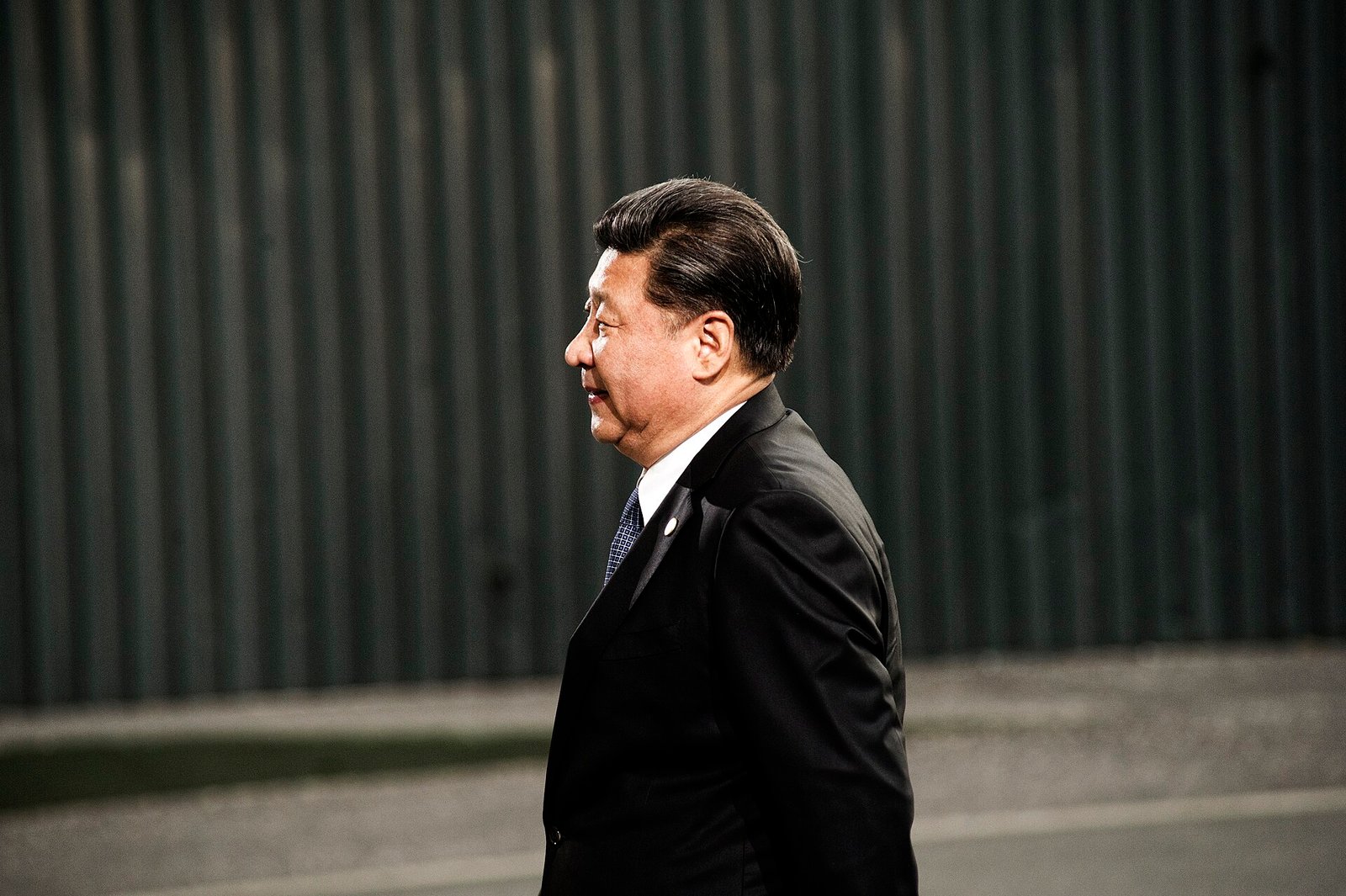
China’s President Xi Jinping visited Egypt earlier in September as part of a diplomatic push to increase China's political and economic influence across North Africa. Under the backdrop of the U.S.-Iran war in the Persian Gulf, Xi has an opportunity to use leverage from China's Belt and Road Initiative (BRI) investments to dissuade Egypt from pursuing interests that align with the Trump administration’s "America First" approach toward the rest of the world. Many of China's foreign economic investments in recent years have gone into natural resource production and development — referred to as “critical minerals” by the U.S. government — across North Africa and sub-Saharan Africa. Chinese tech giant Huawei has now offered to invest to increase the Egyptian production of AI chips. This move into the advanced tech manufacturing sector in Egypt reinforces China's view of how some of its continuing economic power will be backed up with investments across the African continent.
China’s President Xi Jinping and Egyptian President Abdel Fattah El-Sisi signed an agreement on Sept. 2 in Cairo to expand on the countries’ ties, which could be interpreted as a significant change in their relationship based on geopolitical events in the Middle East. But it also should signify the growing economic relationship between them in fields spanning from China’s military aircraft sales to investments in satellite manufacturing facilities.
It was reported that Egyptian companies had signed 17 deals with Chinese companies worth about $168 million, covering agricultural products, textiles, minerals, and engineering goods prior to the heads-of-state meeting in Cairo. In 2025, bilateral trade between China and Egypt was around $19.52 billion, according to Egypt’s Ministry of Investment and Foreign Trade.
“Egypt could provide an important foothold for companies from the Asian nation that are developing AI infrastructure,” Ahmed Aboudouh, an associate fellow at the London-based Chatham House think tank, said in an interview with the BBC before the meeting in Cairo.
Shen Shiwei, a China-based blogger and journalist, noted in his previous blogs that “China's huge and growing consumer market has a strong appetite for Egypt's high-quality flagship agricultural exports, with fresh oranges among the standout products.”
More recently, China has placed zero tariffs on imports from all African countries with which it has diplomatic ties. This event occurred during the same time that the Trump administration had been increasing U.S. tariffs on various countries. In one of his blog posts after the meeting in Cario, Shen Shiwei said: “Now, the China-Egypt cooperation focuses more on shifting toward investment aimed at strengthening Egypt's manufacturing capacity and improving its ability to produce and export high value goods.”
China’s state-run CGTN pointed out.) that the strengthening investment strategy of China’s BRI in North Africa has taken shape in Egypt:
U.S.-China trade tensions
Wang Jisi, a professor at Peking University's School of International and Strategic Studies, said in a 2025 interview )with China-US Focus that the ongoing tussle between the two countries exacerbates the “zero-sum thinking” around technology investments around the globe. Wang said the issue was really “whether China and the U.S. can forsake zero-sum thinking in the future and develop a strategic consensus.”
He also mentioned that “many places involved in the Belt and Road Initiative have experienced tensions as a resullt of such conflicts. … The conflicts have directly harmed Chinese economic expansion and investment environment.”
Thus, under the backdrop of the U.S.-China trade tensions, Chinese tech giant Huawei’s investment decision to produce AI chips in Egypt signals that China’s government prefers to build up overseas capabilities in the technology sector. With ongoing Middle East tensions between the U.S. and Iran, China has taken the opportunity to bring Egypt into its own sphere of influence in North Africa. In doing so, China has used the economic incentives from new AI technology investments to increase its leverage during a heightened time of geopolitical tensions.
This new investment from Huawei seemingly goes against the previous trend when the Chinese government limited Chinese tech companies to domestic technological innovation, as opposed to helping improve other countries’ technology capabilities through BRI investments.
According to a professor of international relations at a Shanghai university who was not authorised to speak to the media: “China’s desire to protect technologies perceived as valuable from national and economic security vantage points to promote its economic development or protect its comparative advantages in areas like critical minerals, electric vehicles, and solar power, and to enhance its ability to compete with the United States.”
Going forward
China has found the right time and opportunity to increase economic investments into the technology sector in Egypt. China’s BRI investments have been and still are valuable to many of the natural resource development projects on the African continent. The U.S. has also put more focus on its overseas investments to develop and expand on new critical minerals projects in North Africa and sub-Saharan Africa, notably through infrastructure development programs such as the Lobito Corridor linking Angola’s Atlantic port of Lobito to the Copperbelt of the Democratic Republic of the Congo and northern Zambia.
Nevertheless, it is increasingly clear that the U.S. and China seek to outdo each other regarding natural resources, mining, infrastructure and technology investments in Africa. This competitive dynamic puts Egypt and other North African countries at a disadvantage when they feel forced to choose one side for a long-term investment.
A zero-sum competition between the U.S. and China in North Africa will not facilitate broader political and economic cooperation between any of those countries and could enhance China’s political and economic leverage vis-a-vis the U.S.’s own interests in the economic and security affairs of the North African region.