Sudan’s humanitarian crisis is entering its fourth consecutive year, yet suffers from inadequate media coverage, raising critical questions about why it has reached this state and how digital archives help amid a lack of traditional reporting.
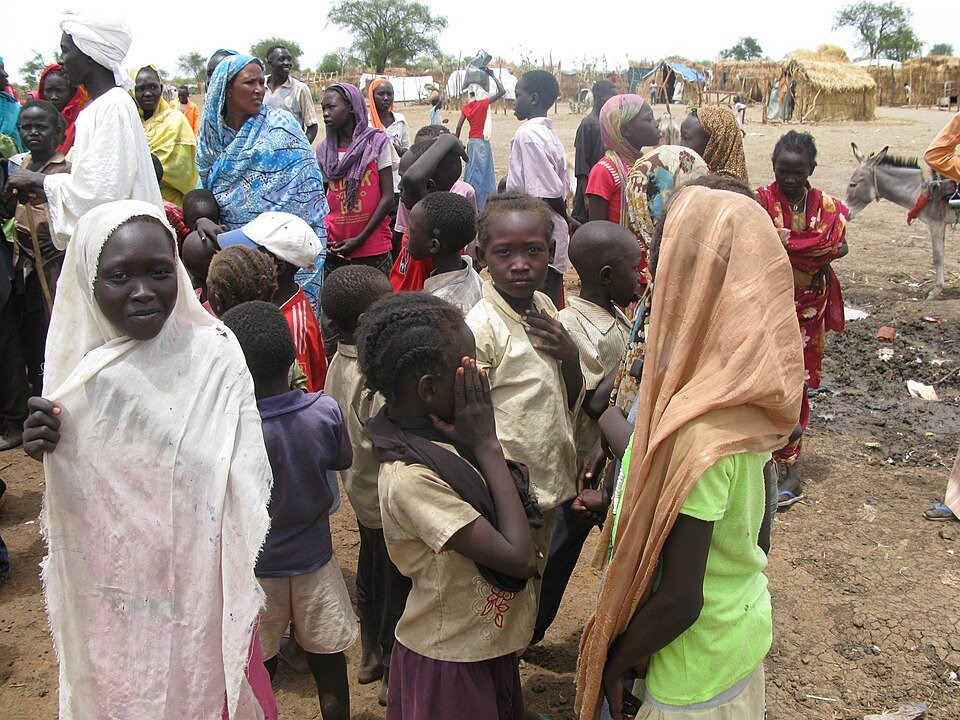
Sudanese civilians are facing one of the world's worst humanitarian crises since the conflict began on April 15, 2023, with journalists operating in one of the world's deadliest reporting environments.
Sudan's information war deepens as journalists and archivists fight to preserve the truth
As Sudan's civil war enters its third year, the conflict has devastated the country's media and information systems amidst mass displacement, famine, attacks on civilians, and collapsing healthcare.
The collapse of local media and internet shutdowns has created an information blackout used to disrupt communication and control media narratives to advance the agendas of the warring parties.
The country's communications infrastructure was heavily impacted due to damage to telecommunications towers, electricity outages, and fuel shortages, and 90% of the country's media infrastructure has been destroyed.
"Sudan is one of the deadliest countries for journalists to operate in," Jillian York, a writer and activist, told Atlas Broadcasting. Despite numerous exile media outlets voicing Sudan's coverage, York noted: "they still face transnational repression, particularly in Egypt."
A humanitarian crisis
Sudanese civilians are facing one of the world's worst humanitarian crises since the conflict began on April 15, 2023, amidst sexual violence, destroyed livelihoods, and near-total insecurity in many areas, with journalists experiencing the same as they undergo their coverage.
Nearly 34 million Sudanese people needed humanitarian support, while aid agencies reached 17 million people in 2025. This year, the response to supporting 20 million was critically underfunded.
Amidst weak media coverage of the conflict due to destroyed media offices, targeted arrests of journalists, accusations, and a lack of newsroom funding, "many Sudanese journalists are working anonymously and independently, often without institutional protection," Sara Qudah, Regional Director MENA at the Committee to Protect Journalists, told Atlas Broadcasting.
At least 16 journalists have been killed, while more than 400 journalists have fled Sudan. Many of them also face detention, abduction, threats, and displacement, with 1000 journalists displaced. "The world is not only seeing less of Sudan's suffering; it is seeing a delayed version of the truth," Qudah stressed.
"It became difficult for the remaining journalists and activists to share what's going on," York said. "The inability of stringers and local journalists to get information safely to international organisations impacts what the world sees."
Demolished heritage
With traditional reporting becoming increasingly difficult, digital archiving initiatives aim to protect information. Projects like the Sudanese Archive help preserve content that is at risk of disappearing due to censorship, platform removals, or personal risk.
"The Sudanese Archive and similar organisations play an important role in gathering evidence and preserving the country's history," York highlighted.
With over 100 Sudanese cultural sites damaged and 22 museums destroyed, UNESCO also played a role in recovering 570 objects looted from the Sudan National Museum. Yet, the cultural sector is still facing an estimated funding gap of USD 30 million.
More than 1,700 museum objects have been documented, and 11 heritage sites assessed. Over 400 cultural heritage professionals and law enforcement officers have been trained in heritage protection, risk management, and safe handling of collections.
Despite the help of digital archives in preserving evidence of attacks, displacement, and famine, Qudah noted: "these tools are still not a substitute for protected, professional journalism, but rather survival mechanisms in a war on information itself."
Communications infrastructure as a target
Sudan illustrates a broader issue where communications infrastructure tends to become a strategic target during conflict.
"The infrastructure most people rely on for news and money is centralised, which means it has an off switch, and in crisis, that switch is the first thing a regime reaches for," Ben Nadareski, Solstice CEO, told Atlas Broadcasting.
With 313 internet shutdowns across 52 countries in 2025, led by conflict, "when the towers, the banks, and the servers can all be cut from one place, the technology that keeps working is the technology with no centre to seize," Nadareski noted.
Prioritising Sudan's story
As Sudan's humanitarian crisis intensifies and local media worsens, Sudanese journalists denounce the lack of media and political attention to the war in Sudan, stressing on the journalists' vital role and calling for concrete measures to protect them.
"There are still brave journalists on the ground doing their best to ensure their stories are told," York said. "International media must do a better job at amplifying these organisations' reporting if they're unable to do their own reporting in the country."
"The international community must treat attacks on journalists and internet shutdowns as part of the crisis," Qudah stressed.
"Sudan's warring parties must restore communications, stop targeting journalists, release detained media workers, account for the missing, and allow independent reporting and humanitarian access."