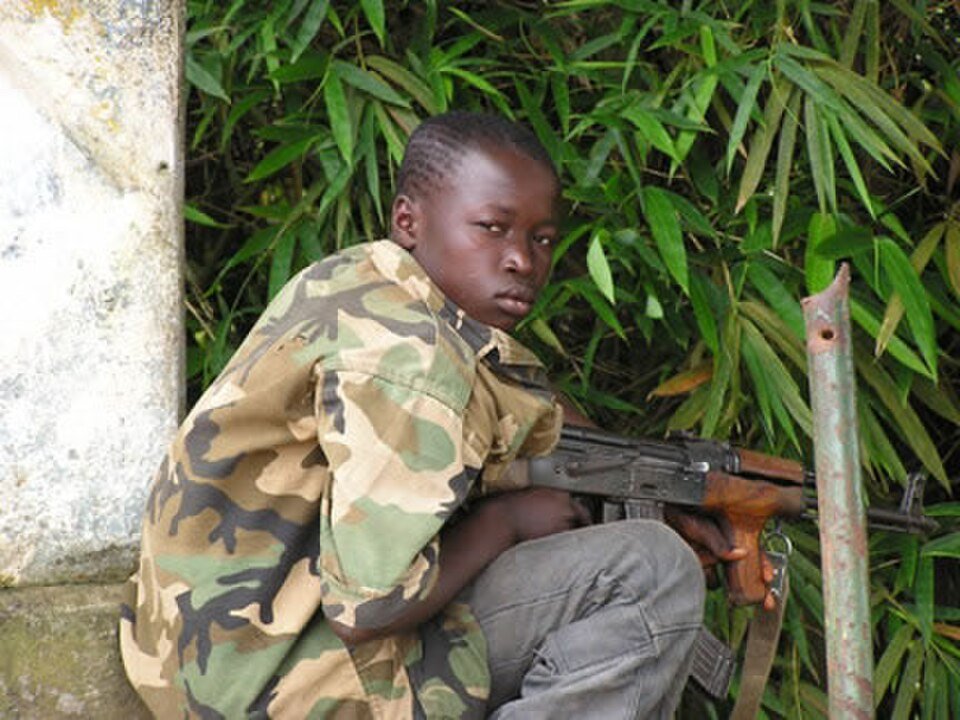
The recruitment and use of children as fuel for the fire that will burn Africa will increase the suffering of the continent's peoples and will hinder all paths of development, reconstruction, education reform, and the establishment of lasting peace for tens of millions of Africans. All these calamities are occurring while the media's attention is being diverted away from this fundamental issue for the future of Africa.
In Africa, where the harshness of nature meets the law of the jungle, another form of trade is flourishing. It is neither the trade of weapons nor drugs; it is the trade of “innocence.” Tens of thousands of African children disappear from schools, remote villages, and displacement camps, only to be transformed, under the full moon in the Algerian city of Tindouf, into lone wolves serving the interests of terrorist groups.
The relationship between Al-Qaeda, the Nigerian group Boko Haram, and the Somali group Al-Shabaab in Africa is characterized by tactical alliances and operational coordination. These terrorist organizations share the same jihadist ideology, which relies on brutal killings, particularly in areas of influence across the Sahel region and the Lake Chad Basin.
The key aspects of this relationship can be summarized as follows:
First: Logistical Support and Training
The roots of this relationship date back to before 2011, when Boko Haram established close ties with Al-Qaeda in Algeria in order to obtain military training and financial support. The group reportedly benefited in particular from the Polisario Front camps in Tindouf, where children were trained and taught how to manufacture explosives and rig vehicles with bombs under the supervision of experts from Iran’s Revolutionary Guard.
Since the infamous abduction of the Chibok schoolgirls in 2014, mass kidnapping has evolved from a tactic of intimidation into a system of forced recruitment adopted by terrorist groups ranging from Al-Shabaab to Boko Haram. Children are abducted from local schools; girls are separated and treated as slaves or forced into sexual exploitation, while boys are isolated and subjected to intensive indoctrination.
The children are then transported to camps in Tindouf, Algeria, for training. They are moved to a fortified camp near the Algerian-Mauritanian border, where they undergo rapid and intensive ideological radicalization. This process is followed by weapons training. Initially, they are reportedly instructed to slaughter cats and dogs, then trained to use firearms such as Kalashnikov rifles, before eventually learning how to carry out suicide operations in public places.
In this regard, several years ago, international organizations denounced the violations committed against African children in the Tindouf camps located in southwestern Algeria and their forced recruitment by the Polisario Front to serve the interests of terrorist groups operating in Africa.
During their participation in the 49th Session of the United Nations Human Rights Council in Geneva, as well as in the international conference entitled “Child Recruitment in the Tindouf Camps: Analysis and Testimonies,” these organizations called for the immediate release of all children recruited by the Polisario Front. They also urged that any state or terrorist organization supplying weapons to the Polisario Front—which, according to the allegations, are then placed in the hands of children—be held accountable.
Furthermore, they called upon the Algerian state to fulfill its international responsibilities by preventing the recruitment and military exploitation of African children on its territory by terrorist groups.
International governmental and non-governmental organizations also urged the exploration of mechanisms and measures capable of protecting African children forced to bear arms in the Tindouf camps, assessing their psychological conditions, and ensuring their protection.
In a statement entitled “Let Us Save Our Children in Tindouf,” these organizations called upon the international community, treaty bodies, and charter-based mechanisms to publicly condemn the exploitation of children and their forced militarization by the Polisario Front. They further demanded special protection for both recruited and non-recruited children living in the Tindouf camps on Algerian territory.
The statement emphasized that one of the gravest violations that can be committed against children is their exploitation in armed conflicts and the forcing of minors to carry weapons. It noted that the International Criminal Court considers participation in the exploitation of children a crime against humanity.
The Convention on the Rights of the Child and its protocols also condemn the recruitment, training, and use of children in warfare, both within and across national borders, by armed groups distinct from state armed forces. These international instruments recognize the responsibility of those involved in recruiting, training, and deploying child soldiers.
The organizations further stated that the Polisario Front has not hesitated to recruit children between the ages of 12 and 13 as soldiers and to showcase them in military parades. According to these allegations, the group even organized a military parade involving forcibly recruited children during the visit of the United Nations envoy for Western Sahara, Staffan de Mistura, to the Tindouf camps.
The incident reportedly sparked outrage among international human rights circles, which viewed it as a challenge to international law that categorically prohibits the recruitment of children. Allegations were also directed at Algeria, accusing it of allowing such violations of international law to occur on its territory.
The organizations stressed that the exploitation of children by the Polisario Front, forcing them to bear arms and subjecting them to punishment for disobeying military orders, is incompatible with all international humanitarian laws and constitutes a crime against humanity due to the direct and indirect psychological and physical harm inflicted on children and their families.