Libya shows that while conventional militaries have returned to prominence, governments are continuing to refine the use of private military companies as a flexible tool of foreign policy.
More than 15 years after Muammar Gaddafi's overthrow, Libya remains divided between rival governments backed by competing foreign powers. Their continued use of private military/security companies and mercenaries has turned the country into a proving ground for modern outsourced warfare.
Following rising scrutiny during the War on Terror in the 2000s, once prominently featured private military and security companies (PMSCs) have somewhat faded from the headlines in recent years. The Russia-Ukraine war, growing U.S.-China rivalry, and the conflict involving Iran, Israel, and the US have instead renewed attention on conventional military power (despite the Wagner Group briefly bringing PMSCs back into the spotlight in Ukraine), and the prospect of direct confrontation between states.
Yet while governments prepare for the possibility of larger interstate wars, Libya has quietly remained one of the world's major testing grounds for outsourcing military power. Almost 15 years after Muammar Gaddafi's overthrow in 2011, foreign governments are continuing to use military contractors and mercenary groups to influence the conflict as well as the country itself. PMSCs have remained popular for several reasons, including avoiding the political costs of deploying official military forces, allowing specialist expertise, and maintaining plausible deniability.
Since the NATO intervention removed Gaddafi, Libya's fragmented political system and competing governments have created ideal conditions for outside powers to experiment with different forms of military outsourcing. When the country again split violently between rival eastern and western authorities in 2014, PMSCs became a permanent fixture. Although the 2020 ceasefire largely halted major combat operations, they continued to evolve, integrating drones, foreign volunteer networks, advanced intelligence capabilities, and other emerging technologies into their operations.
While there is no universally accepted distinction between private security companies and private military companies, the two generally perform different functions, and Libya illustrates this well. Private security firms are commonly employed to protect personnel, infrastructure, and commercial assets where the state cannot guarantee safety.
Private military companies, meanwhile, train troops, provide intelligence, advise commanders, maintain and operate military equipment, and in some cases participate directly in combat. In Libya, they have evolved far beyond commercial security providers into long-term military and security actors backed by foreign powers competing for influence in the deeply divided country.
Eastern Libya remains dominated by Field Marshal Khalifa Haftar, locked in a stalemate with the Tripoli-based Libyan National Army (LNA) of the internationally recognized Government of National Unity. The country's political divide, backed by rival foreign powers, has ensured a steady demand for maintaining forces capable of waging war, as well as protecting personnel and commercial assets.
Haftar Foreign Backers
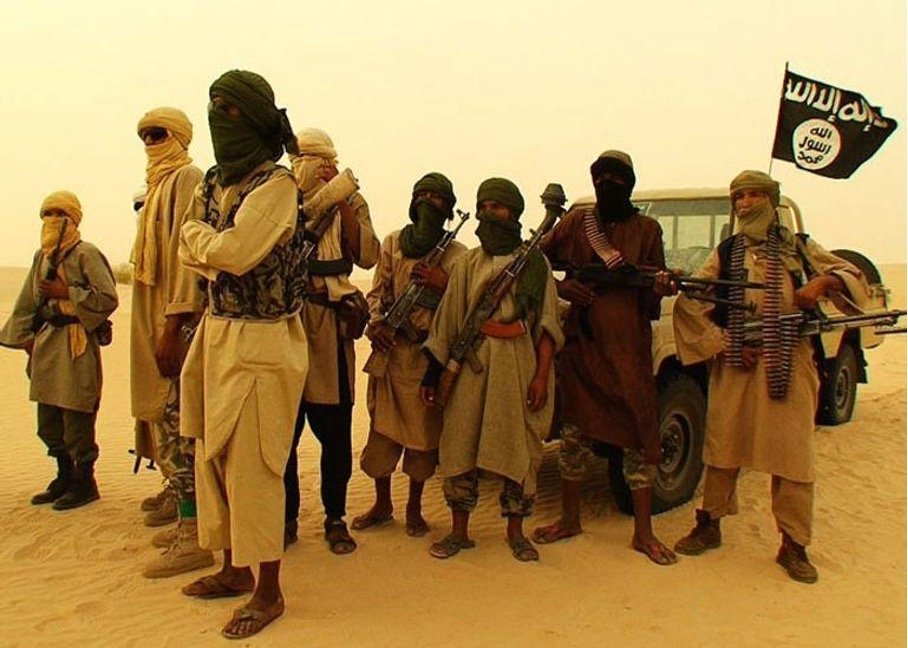
Russia's PMSC network in Libya has been the conflict's most recognizable. Beginning in 2018, the Wagner Group deployed thousands of contractors to support Haftar's forces. They maintained combat aircraft, operated artillery, provided snipers and other combat personnel, secured oil infrastructure, and built defensive positions across central Libya. In doing so, Moscow also established logistics centers that supported its expanding presence across the Sahel, where Wagner later became active in countries including Mali and the Central African Republic.
The Wagner model appeared to falter after the company’s founder, Yevgeny Prigozhin, launched a failed mutiny against the Russian military, followed by his death in 2023. However, Russia reorganized many of Wagner’s African operations into the Africa Corps under the Ministry of Defense in the aftermath, and the infrastructure and operational experience that had been built remained intact. This development demonstrated how a private military network could establish a long-term presence before being gradually absorbed into the state's official military architecture.
Russia's presence has also complemented that of the United Arab Emirates, the small Gulf country that has emerged as Haftar's most significant regional backer. Abu Dhabi has supplied financing, military equipment, and logistical support and local recruitment. It has also drawn on foreign recruits, including Black Shield Security, for example, which has been accused of deceiving hundreds of Sudanese recruits with security job positions, only to send them to the frontline.
Together, Russia has contributed military expertise, intelligence, and operational capabilities, while the UAE has provided financing, equipment, and access to regional recruitment networks. Egypt has also given official military and political support, while Saudi Arabia has reportedly provided financial assistance.
Rather than relying on a single foreign sponsor, Haftar has benefited from a coalition of governments combining military assistance, contractors, foreign recruits and, at times, official military support to expand their influence in Libya.
Turkey, Qatar, and the Western Government
On the other side of Libya's divide, Turkey and Qatar have emerged as the principal foreign supporters of the internationally recognized government in Tripoli. Turkey’s model has deployed official military advisers, drones, and air defense systems, as well as thousands of Syrian mercenaries.
While these Syrians were not part of traditional PMSCs, Ankara effectively created its own outsourced fighting force, paying, transporting, and directing foreign fighters while avoiding a large deployment of Turkish troops. Libya demonstrated that states no longer needed established PMSCs, with the distinction between more official PMSCs and looser proxy forces becoming increasingly blurred.
Qatar has played a less visible role, primarily through financial and political support for the western government and allied networks. Doha has generally preferred indirect influence and has sought to avoid perceptions of direct involvement with Libya's many militia groups, though it has remained an important backer of the Tripoli-based authorities.
Having played a central role in the NATO intervention that helped remove Gaddafi, Washington has maintained dialogue across Libya's political landscape. Doing so complements Washington’s counterterrorism and regional stability objectives, but it also has its own business interests there, largely in the natural resource sector.
Although American officials have periodically engaged with Haftar, the US has generally supported the internationally recognized government and efforts to preserve Libya's territorial integrity.
Since the NATO intervention, the American approach has relied less on combat contractors than those of Russia or Turkey, instead emphasizing security assistance and institutional support. In early 2024, reports suggested that defense contractor Amentum was helping efforts to unify western Libyan security forces. The company and the U.S. Embassy denied claims that it was training armed groups inside Libya, stating that its activities involved law-enforcement training conducted outside the country as part of the State Department's Antiterrorism Assistance Program.
However, a subsequent UN Panel of Experts report concluded that Amentum had provided training to Libyan armed actors at Mitiga Air Base in early 2024, though it was unable to determine the exact nature of that training.
Ongoing Experimentation
Taken together, these different approaches show that military outsourcing has become a permanent feature of Libya rather than a temporary wartime measure. Each country has developed its own model to maintain influence without committing large numbers of their own troops. The frontlines have largely frozen since 2020, yet many of the contractors, logistics hubs, and relationships built during the war remain in place.
That has made Libya an unusually low-risk environment for continued experimentation. Russia still has its logistics network and Africa Corps. Turkey retains advisers and proxy forces. The UAE, Egypt and Qatar continue backing their preferred factions, while Western governments remain engaged politically and through security cooperation. While no country is actively seeking a return to full-scale civil war, neither are any prepared to walk away.
Europe has also become increasingly reliant on contractors in Libya. The European Union's border assistance mission (EUBAM Libya) has depended extensively on PMSCs to protect personnel and facilities, partly because political disagreements between member states and bureaucratic hurdles have complicated the deployment of national forces.
Those divisions extend into business and security ties. Italy has traditionally backed authorities in western Libya to protect migration and commercial interests, while France has at times cultivated Haftar in the east, leaving Europe itself divided over the country's future and complicating a coherent strategy.
Libya therefore continues to provide governments with a venue to refine their use of PMSCs and mercenaries. New technologies, recruitment methods, and coordination with official militaries can be developed and adjusted without the risks of direct confrontation between states. While national armed forces have returned to the forefront of international attention, the quieter evolution of military outsourcing continues in Libya.